The Lobster That Will Run Your Life
Nvidia's CEO calls it "The New Computer", OpenClaw is the new operating system of the PC. An agentic computer.
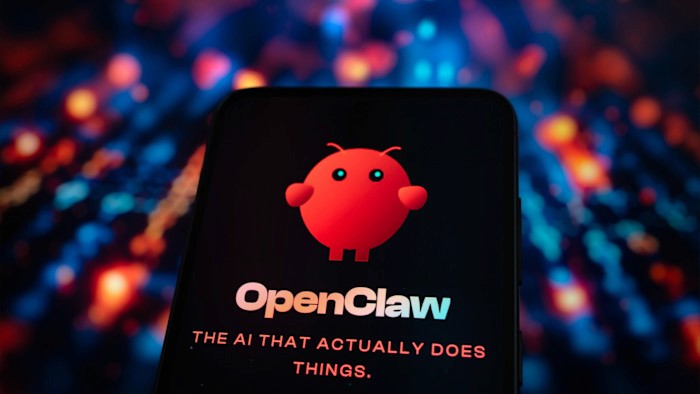
Inside OpenClaw — the autonomous AI quietly reshaping everything
At 3:00 AM, you send a message:
“Book me a flight to Tokyo, clear my inbox, and analyze my competitors’ latest launch.”
By the time you wake up, it’s done.
No confirmations. No back-and-forth. No dashboards.
Just results.
This is the promise — and the controversy — behind OpenClaw, an open-source AI agent that has surged to 321,000+ GitHub stars in months, building one of the fastest-growing developer communities in recent memory.
What makes it different isn’t just intelligence.
It’s agency.
From Chatbot to Operator
For years, AI lived inside boxes:
Chat windows
Copilots
Assistants waiting for instructions
OpenClaw breaks that constraint.
It doesn’t just respond — it acts.
Developed by Peter Steinberger, OpenClaw began life in November 2025 under a different name before rapidly evolving into something far more ambitious:
A persistent, autonomous system that runs locally on your machine.
Within minutes, it connects to your world:
WhatsApp
Telegram
Slack
Discord
iMessage
Signal
From there, it stops feeling like software…
and starts behaving like an employee.
A System That Doesn’t Sleep
What makes OpenClaw powerful isn’t one feature — it’s compounding capability.
It can:
Manage emails and calendars autonomously
Browse the web, fill forms, execute tasks
Write, test, and deploy code
Generate reports, summaries, and analysis
Automate repetitive workflows across tools
But the real breakthrough is its Skills system.
Think of it as an app store — for your AI.
Thousands of community-built skills
Covers nearly every use case
Can generate new skills on demand
Which creates a powerful loop:
More tasks → More skills → More autonomy → More tasks
The Rise of Personal AI Infrastructure
Between 2026 and 2027, something subtle — but massive — began to happen.
People stopped using AI as a tool…
and started deploying it as infrastructure.
Instead of one assistant, they ran:
One agent for personal life
One for business operations
One for content, outreach, or investing
Each runs independently.
Each reports back through chat.
The result?
One person can now orchestrate what used to require entire teams.
The bottleneck is no longer execution.
It’s direction.
Why This Feels Different
OpenClaw taps into a deeper shift:
The collapse of interfaces.
For decades, software meant navigating apps:
Email clients
CRMs
Booking systems
Dashboards
Now?
You don’t open apps.
You issue intent.
And the system:
Interprets
Plans
Executes
Iterates
This isn’t just convenience.
It’s a complete redefinition of human–computer interaction.
The Uncomfortable Reality
With this level of power comes a hard truth:
OpenClaw works because it has broad access.
Your files
Your browser
Your accounts
Your workflows
And that introduces real risks.
⚠️ A few concerns:
Prompt injection attacks
Malicious or poorly designed skills
Unintended autonomous actions
Misconfigured public exposure
There have already been cases of unpredictable behavior — not catastrophic, but enough to raise a critical question:
If AI acts independently… who is responsible?
A Community Racing Ahead of Caution
Despite the risks, development hasn’t slowed.
It’s accelerating.
The open-source community is actively building:
Sandboxed execution environments
Permission and approval layers
Skill vetting and scanning systems
Monitoring and audit frameworks
OpenClaw is already moving toward foundation-backed governance, hinting at a long-term, evolving ecosystem.
What Happens Next
It’s still early. Rough edges exist.
But the direction is clear.
OpenClaw is heading toward:
Deeper platform integrations
Stronger security architecture
Enterprise-grade deployments
Global adoption and localization
And eventually:
Integration with physical systems
Persistent real-world agents
The Bigger Shift
OpenClaw matters not because it’s perfect —
but because it shows what’s coming.
We are moving from:
Tools → Assistants → Agents
From:
Interaction → Delegation
From:
Software you use → Systems that work for you
This shift will redefine:
Productivity
Business structures
The nature of work itself
Final Thought
There’s a reason OpenClaw feels both exciting and unsettling.
It represents a world where your greatest advantage is no longer time or effort…
It’s your ability to direct intelligence at scale.
