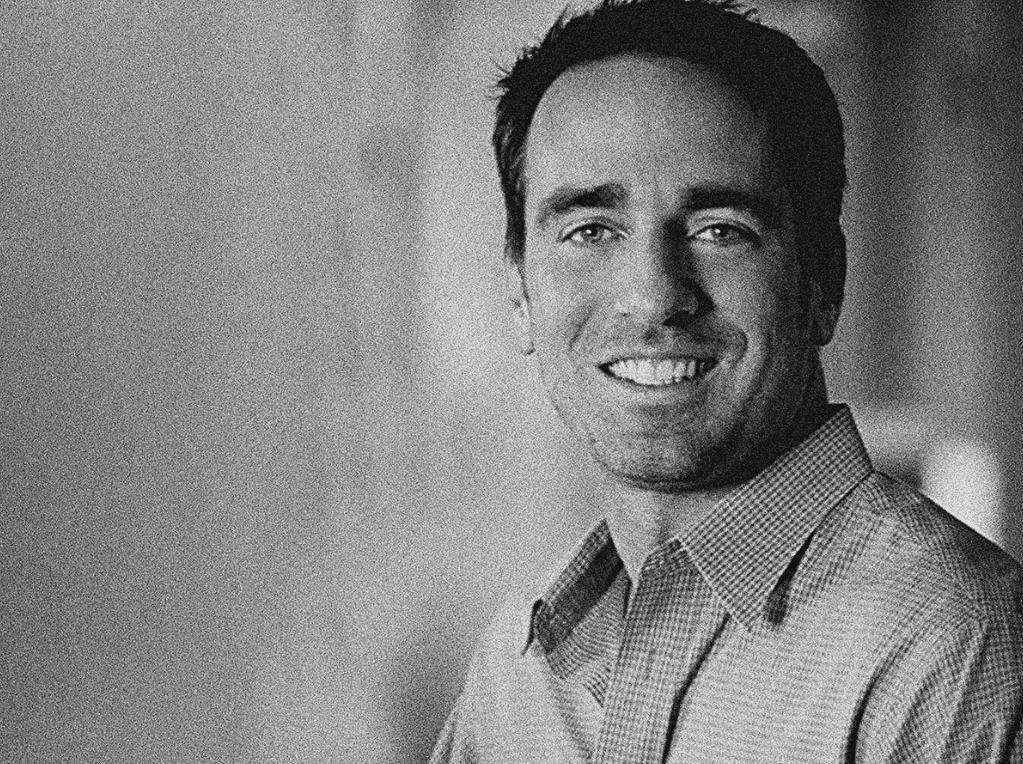
Chris Camillo — The Investor Who Watches TikTok, Not Charts
$20k to $80 million. Most investors stare at charts. Chris Camillo watches people.

The Investor Who Reads Society Instead of Spreadsheets
Inside Chris Camillo’s Unconventional Edge
He doesn’t sit buried in spreadsheets.
He doesn’t obsess over earnings calls.
Instead, he watches people.
Shopping trends.
Social media spikes.
Cultural shifts.
And then he turns those observations into high-conviction trades.
He calls it social arbitrage — the idea that real-world behavior changes faster than Wall Street can react.
And for a period, it worked extraordinarily well.
Starting with roughly $20,000 in the mid-2000s, Camillo reportedly grew it into $80 million within about a decade — not by out-analyzing analysts, but by out-observing them.
The Core Idea: Information Before It Becomes “Information”
Traditional investing relies on:
Earnings reports
Analyst ratings
Financial statements
Camillo flips this model.
He looks for signals before they become data.
Things like:
A product constantly selling out
A brand suddenly dominating TikTok
A shift in how people spend time or money
By the time these show up in quarterly earnings…
The stock has usually already moved.
His edge exists in that gap — often weeks to months before institutions catch on.
The Method: Social Arbitrage in Action
This isn’t random intuition. It’s a repeatable process.
1. Observe Behavior in Real Time
He treats everyday life like a live data stream.
Some of his best ideas came from:
Walking through stores
Watching what people post online
Noticing repeated patterns over 30–90 day windows
This is qualitative data — but it’s early.
2. Identify the Public Company Behind It
Once a trend is clear, he connects it to a listed company.
The pattern looks like this:
Demand spike → Find the company → Check if priced in
If Wall Street hasn’t reacted yet…
That’s the opportunity.
3. Move Before the Crowd
Speed is everything.
Camillo often enters positions before earnings cycles reflect reality, giving him a window of:
1–2 quarters (3–6 months)
He’s not necessarily holding forever.
He’s exploiting information lag.
4. Exit When the Story Becomes Obvious
Once the trend becomes:
Headlines
Earnings beats
Analyst upgrades
The edge is gone.
In his framework:
Early = Edge
Late = Risk
What Makes This Different?
Most investors compete on:
Financial modeling
Insider insights
Execution speed
Camillo competes on something else:
Perspective
His belief is simple:
“The market is slow to understand culture.”
That delay is the inefficiency he exploits.
⚠️ The Risk: Why This Is Harder Than It Looks
This isn’t easy money.
Social arbitrage depends on:
Correctly interpreting trends
Timing entries before validation
Avoiding false signals (hype ≠ revenue)
A trend can feel massive…
…and still fail to convert into earnings.
The same lag that creates opportunity also creates uncertainty.
🧠 Key Principles to Steal
Strip it down, and his philosophy becomes a sharp playbook:
Pay attention to what people do, not what they say
Act before data confirms your thesis
Exploit time delays in market understanding
Exit when the opportunity becomes obvious
Stay curious — your edge is observation, not access
The Big Insight
Camillo’s strategy reveals something deeper:
Markets are not perfectly efficient —
they are slow to interpret human behavior.
And in a world where trends form in days and spread globally in weeks…
That gap may actually be widening.
Final Thought
If Warren Buffett reads financial statements to understand businesses…
Chris Camillo reads society itself.
One studies balance sheets.
The other studies people:
What they’re buying
What they’re talking about
What they can’t stop doing
And sometimes—
That’s where the real signal begins.
